Is Jakkur good for real estate investment 2026? The full case — Jakkur investment outlook, future of Jakkur real estate, and ROI Jakkur apartments analysis.
The Question Every Serious Investor Asks in 2026
Every real estate investment decision boils down to one question — does this asset, at this price, in this location, at this point in the market cycle, support the return profile the investor needs over the planned holding period. Is Jakkur good for real estate investment 2026 deserves a structured answer rather than a promotional one. The short version is yes, for a specific class of investors with a specific horizon and a specific risk appetite. The long version requires walking through the demand backdrop, the supply position, the pricing landscape, and the forward-looking drivers to arrive at a defensible conclusion.
The Jakkur Investment Outlook — The Demand Side
The Jakkur investment outlook on the demand side rests on three structural pillars. First, the airport corridor employment cluster is continuing to expand, with Manyata Tech Park, Kirloskar Business Park, Prestige Tech Cloud, and the planned Bagmane expansion together adding tenant and end-user demand consistently. Second, the senior corporate housing allowance levels (₹1.0 to ₹2.0 lakh monthly for vice president and director tier) support the rental absorption for premium 3 BHK and 4 BHK inventory. Third, NRI and out-of-city buyer demand from Mumbai, Delhi, Hyderabad, and overseas markets has been consistently strong for ultra-luxury Jakkur inventory. None of these pillars depends on the others, which makes the demand floor structurally durable.
The Future of Jakkur Real Estate — The Supply Side
The future of Jakkur real estate on the supply side is constrained by the aerodrome height envelope and the limited developable land in the immediate Jakkur micro-market. Ultra-luxury launches (₹3.5 Cr plus) in the locality remain limited — Century Astoria is one of the few active pre-launches at this tier, and the broader supply pipeline for the next 24 to 36 months is tight. This supply discipline is a structural advantage for early buyers because pricing power in the secondary market typically follows supply tightness with a one to two year lag. Is Jakkur good for real estate investment 2026 partly hinges on this supply-demand mismatch.
ROI Jakkur Apartments — The Return Math
ROI Jakkur apartments for a buyer entering in 2026 should target a 9 to 11 percent annualised blended return over a 7 to 10 year holding period — composed of 6 to 8 percent capital appreciation and 2.5 to 3.5 percent net rental yield. For a ₹4 Cr apartment, this translates to approximately ₹7.5 to ₹10.5 Cr in total return over 10 years (cumulative, including rental income), with the asset value reaching ₹7.5 to ₹9.0 Cr at exit. Risk-adjusted, this compares favourably to most fixed income alternatives and to many equity asset classes, with the additional benefit of inflation-linked rental income and tax-efficient long-term capital gains treatment.
The Risk Factors Honest Investors Should Consider
Three risks deserve attention. First, construction delivery risk — the project must complete within the 42 to 48 month possession window for the investment thesis to play out cleanly. RERA protections mitigate but do not eliminate this risk. Second, rental absorption risk — if Manyata Tech Park or the broader airport corridor employment cluster contracts unexpectedly, the rental yield component will compress. The diversified employment base reduces but does not eliminate this risk. Third, macro real estate cycle risk — Indian luxury real estate has shown lower volatility than other asset classes but is not immune to sustained downturns. Buyers should size positions accordingly.
Indicative Return Scenario (10-Year Hold)
Scenario | Annual Appreciation | Net Yield | Blended Return | 10-Yr Value (₹4 Cr Entry) |
|---|---|---|---|---|
Base Case | 7% | 3.0% | 10.0% | ~ ₹7.9 Cr |
Optimistic | 8% | 3.5% | 11.5% | ~ ₹8.6 Cr |
Conservative | 5% | 2.5% | 7.5% | ~ ₹6.5 Cr |
Downside | 3% | 2.0% | 5.0% | ~ ₹5.4 Cr |
The Verdict for 2026
Is Jakkur good for real estate investment 2026 has a clear answer for the right investor profile. For HNI buyers with a 7 to 10 year holding horizon, comfortable with luxury real estate as an asset class, looking for inflation-linked rental income alongside capital appreciation, and able to absorb the construction-period payment schedule, the answer is yes. The pre-launch entry point in 2026 captures pricing ahead of the post-RERA revision and ahead of metro Phase 2A and 2B activation, which is the most favourable entry window the locality is likely to offer in the next 24 months.
Related reading: IT Professionals Are Choosing Jakkur for Luxury Living.
FAQs
Is Jakkur a good investment in 2026?
For HNI buyers with 7-10 year horizons looking for combined rental income and capital appreciation, yes. Pre-launch entry in 2026 captures pricing ahead of post-RERA revision and metro activation.What return should an investor expect from a Jakkur luxury apartment?
Base case 10-year blended return of 9-11 percent annualised — 6-8 percent appreciation plus 2.5-3.5 percent net rental yield.What are the main risks?
Construction delivery risk (mitigated by RERA), rental absorption risk (mitigated by diversified employment base), and broader real estate cycle risk.
Related Articles
Century Astoria Cost Sheet Explained: Complete Pricing Breakdown for 3 & 4 BHK
Decode the full Century Astoria cost sheet breakdown — base rate, PLC, GST, stamp duty and registration for 3 BHK and 4 BHK residences in Jakkur.
Century Astoria Payment Plans, Offers and Pre-Launch Benefits
Compare Century Astoria payment plan options — construction-linked, possession-linked, and customised schedules. See pre-launch booking benefits in Jakkur.
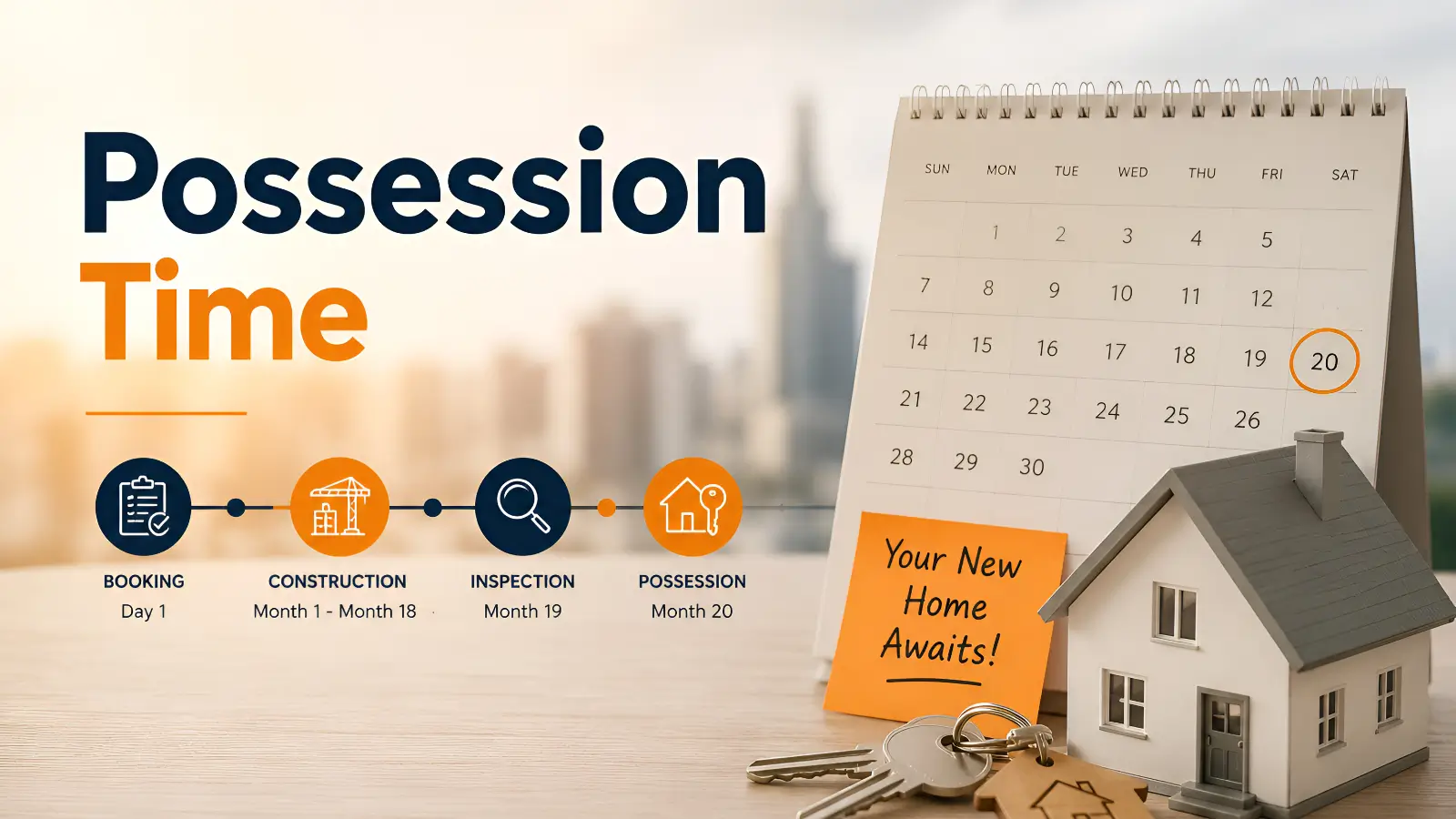
Century Astoria Possession Timeline: When Can You Move In?
Find out the Century Astoria possession date Jakkur — handover schedule, construction milestones, and what pre-launch to handover looks like for buyers.
Century Astoria Construction Updates and Quality Standards
Track Century Astoria construction quality — RCC structural framing, finishing standards, construction timeline, and quality control on the Jakkur project.