What Makes Century Astoria Different from Other Jakkur Apartments
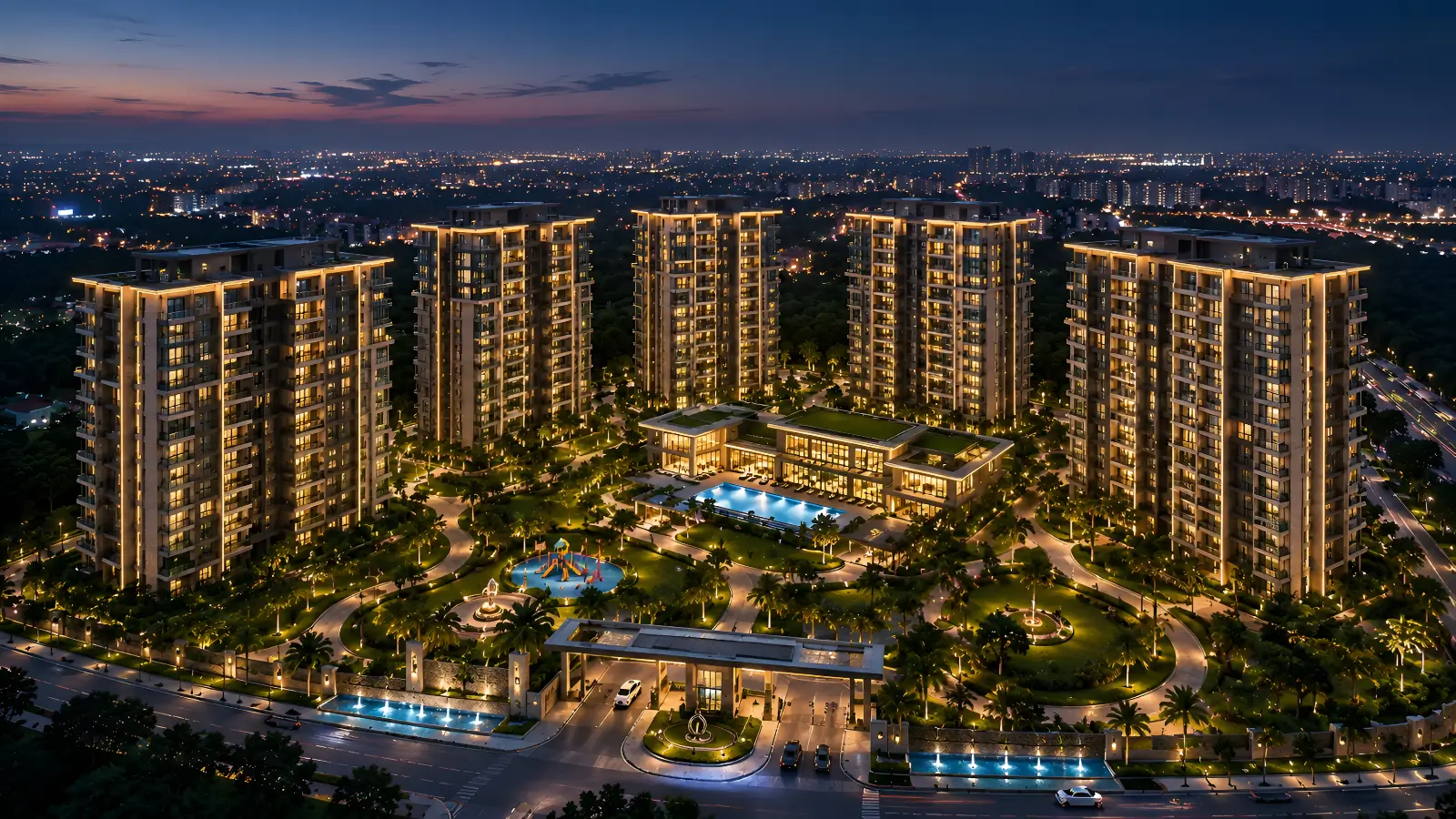
Century Astoria vs other Jakkur projects — luxury apartments Jakkur comparison covering density, planning, amenities, and how to compare Jakkur luxury.
Why a Project-Level Comparison Is the Final Due Diligence Step
After the macro location analysis and the developer-level evaluation, the final due diligence step before booking is the project-level comparison — Century Astoria vs other Jakkur projects, evaluated on the variables that actually differ rather than the headline marketing claims that often look similar across competitors. Most Jakkur luxury launches use similar language (premium specifications, world-class amenities, prime location). The differences only become visible when buyers run a structured comparison across density, planning quality, amenity allocation, and specification tolerance.
Luxury Apartments Jakkur Comparison — The Variables That Matter
Luxury apartments Jakkur comparison should run across six variables. Density (units per acre, residences per tower, lifts per resident) drives daily lifestyle quality. Planning quality (master plan organisation, open space ratio, podium-level continuity) drives long-term liveability. Amenity allocation (clubhouse size per resident, sports infrastructure, outdoor zones) drives experiential value. Specification tolerance (material grades, finishing quality, smart features) drives both daily comfort and resale value. Developer track record drives execution confidence. Pricing fairness (per-sq.ft. against quality benchmarks) drives investment economics.
Where Century Astoria Outperforms
In the Century Astoria vs other Jakkur projects comparison, the project outperforms peer launches on several specific variables. Density is materially lower — Century Astoria's 334 residences across 5 towers on 6.075 acres works out to roughly 55 units per acre, versus 80 to 120 units per acre typical for comparable Jakkur luxury launches. The Zero Common Walls planning is a structural design feature that no peer Jakkur launch currently replicates. The 40,000 sq.ft. clubhouse exceeds the typical 20,000 to 25,000 sq.ft. peer allocation for sub-400-unit projects. The integration within the 52-acre Century Immencity mixed-use township provides a lifestyle context that residential-only peer launches cannot match.
Project Comparison North Bangalore — The Realistic Peer Set
Project comparison North Bangalore against peer luxury launches in adjacent localities reveals a similar pattern. Century Astoria's pre-launch pricing of ₹17,500 to ₹18,500 per sq.ft. sits above the ₹14,000 to ₹17,000 typical Hebbal-Yelahanka range, but the per-sq.ft. premium maps onto structural advantages that are observable rather than marketing-driven. For buyers running a Century Astoria vs other Jakkur projects comparison, the question is not whether the premium exists but whether the structural advantages justify it for the specific buyer's holding strategy.
How to Compare Jakkur Luxury Projects
How to compare Jakkur luxury projects systematically requires three steps. Step one is to assemble the variable matrix — list every project in your shortlist against the six variables above with documented data rather than brochure language. Step two is to weight the variables by your personal priority — owner-occupiers should weight density and planning heavily, investors should weight pricing fairness and developer track record heavily, NRIs should weight specification tolerance and execution confidence. Step three is to run the weighted comparison, recognising that no project will rank first on every variable but that the winner should rank top-3 on the variables you weighted most heavily.
Side-by-Side Comparison Framework
Variable | Century Astoria | Typical Jakkur Peer |
|---|---|---|
Density (units per acre) | ~ 55 | 80 – 120 |
Residences per Tower | Approx. 67 | 100 – 200 |
Lifts per Tower | 4 high-speed | 3 – 4 |
Open Space Ratio | ~ 75% | 50 – 65% |
Clubhouse Size | 40,000 sq.ft. | 20,000 – 25,000 sq.ft. |
Zero Common Walls | Yes | Not typical |
Mixed-Use Township | 52-acre Immencity | Standalone residential |
Per-Sq.Ft. Rate | ₹17,500 – 18,500 | ₹14,000 – 17,000 |
The Honest Conclusion
Century Astoria vs other Jakkur projects is not a debate the developer wins simply by claiming differentiation. The differentiation has to be visible on a structured comparison sheet — and it is. The 55 units per acre density figure, the 40,000 sq.ft. clubhouse allocation, the Zero Common Walls planning, and the 52-acre integrated township context are each observable rather than marketing-driven. For buyers running this comparison honestly, the pricing premium maps onto structural advantages that competing projects do not replicate.
Related reading: Government Policies Driving Real Estate Growth in Bangalore.
FAQs
How is Century Astoria different from other luxury launches in Jakkur?
Lower density (55 units per acre), Zero Common Walls planning, double-sized clubhouse (40,000 sq.ft.), and integration within the 52-acre Century Immencity mixed-use township.What variables should buyers compare across Jakkur projects?
Density, planning quality, amenity allocation, specification tolerance, developer track record, and pricing fairness against quality benchmarks.Does Century Astoria's price premium reflect actual differentiation?
Yes. The ₹500-1,500 per sq.ft. premium over typical Jakkur peers maps onto observable structural advantages rather than marketing-driven positioning.
Related Articles
Century Astoria Cost Sheet Explained: Complete Pricing Breakdown for 3 & 4 BHK
Decode the full Century Astoria cost sheet breakdown — base rate, PLC, GST, stamp duty and registration for 3 BHK and 4 BHK residences in Jakkur.

Century Astoria Payment Plans, Offers and Pre-Launch Benefits
Compare Century Astoria payment plan options — construction-linked, possession-linked, and customised schedules. See pre-launch booking benefits in Jakkur.

Century Astoria Possession Timeline: When Can You Move In?
Find out the Century Astoria possession date Jakkur — handover schedule, construction milestones, and what pre-launch to handover looks like for buyers.
Century Astoria Construction Updates and Quality Standards
Track Century Astoria construction quality — RCC structural framing, finishing standards, construction timeline, and quality control on the Jakkur project.