Balcony Planning, Ventilation and Natural Light in Luxury Apartments
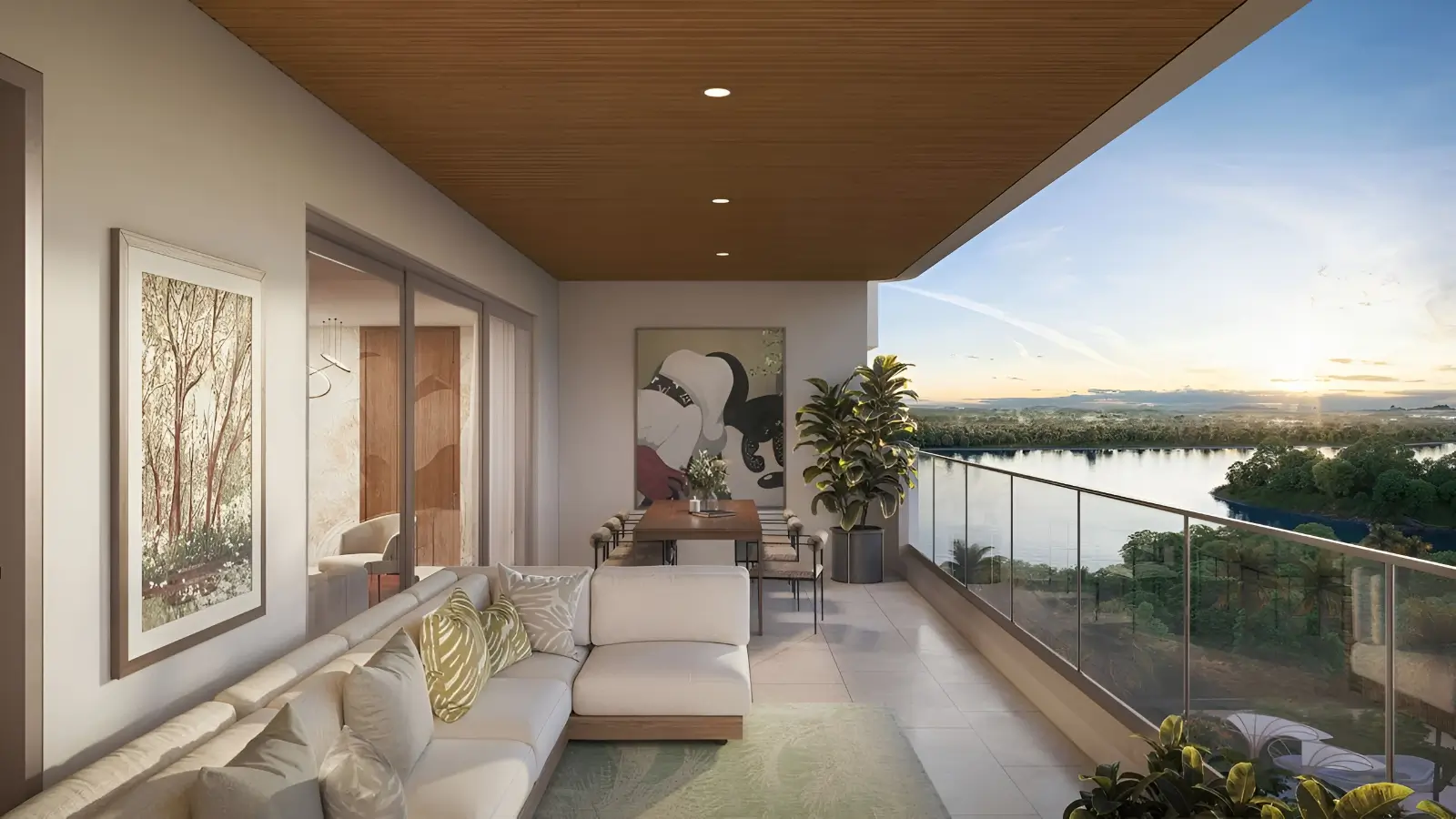
Balcony and ventilation design luxury apartments need — cross ventilation luxury apartment, natural light planning Jakkur, and deep balcony luxury apartment.
The Three Most Underrated Variables in a Luxury Floor Plan
Buyers evaluate floor plans on room count, area, and visual layout. They rarely evaluate them on the three variables that actually shape daily comfort across 20 years of residence — balcony depth and orientation, cross-ventilation potential, and natural light penetration. The balcony and ventilation design luxury apartments deliver determines whether the home stays comfortable without aggressive air conditioning in Bangalore's mild-to-warm climate, whether morning sunlight reaches the living spaces during winter, and whether the balconies are usable across the year rather than being decorative features that residents avoid. Understanding these three variables transforms how buyers read floor plans.
Cross Ventilation Luxury Apartment Planning
Cross ventilation luxury apartment planning requires the floor plate to have openings on at least two different orientations — ideally three — so that air can move through the residence rather than stagnating. Bangalore's climate is mild enough that natural ventilation alone keeps homes comfortable for 7 to 8 months of the year, but only if the floor plan supports the air movement. The balcony and ventilation design luxury apartments at Century Astoria are oriented to capture the prevailing south-west to north-east breeze patterns of the Bangalore climate, with cross-ventilation paths engineered into the floor plate rather than left to chance. This reduces dependence on air conditioning, lowers electricity costs across the holding period, and maintains better indoor air quality.
Natural Light Planning Jakkur Apartments Need
Natural light planning Jakkur apartments deliver depends on three variables — window aperture size relative to floor area, orientation of the principal openings, and the absence of obstructions that block sky exposure. The balcony and ventilation design luxury apartments at this specification tier should deliver at least 12 to 15 percent of floor area as glazing on the principal living surfaces, with the master bedroom and living-dining sequence oriented to capture morning light. The deliberate inter-tower spacing at Century Astoria ensures that no residence is shadowed by an adjacent tower during the working day, which is the structural advantage that protects the natural light delivery.
Deep Balcony Luxury Apartment Design
Deep balcony luxury apartment design is the architectural decision that distinguishes serious balcony integration from decorative attachment. A balcony depth of 1.2 metres or less functions as a planter ledge — usable for plants and limited outdoor furniture, but not for seated meals, morning coffee, or outdoor work. A balcony depth of 1.8 metres or more functions as outdoor living space — usable for two-person dining, work-from-balcony arrangements, and the kind of daily outdoor use that defines luxury living. The balcony and ventilation design luxury apartments at Century Astoria's specification tier should include deep balcony orientations on at least the principal living spaces, with corner residences offering wraparound terraces that materially improve the lifestyle experience.
Why Orientation Matters as Much as Depth
Balcony orientation determines whether the outdoor space is actually usable across the year. East-facing balconies receive morning light and are usable through the day. West-facing balconies become uncomfortable in late afternoon during summer months. North-facing balconies receive consistent indirect light and are usable across most of the year. South-facing balconies see strong sun in winter but heat penalty in summer. The balcony and ventilation design luxury apartments deliver should be calibrated to the specific orientation rather than treated as a generic outdoor surface.
The Compound Effect of Getting These Variables Right
When balcony, ventilation, and natural light variables are calibrated correctly, the home experience transforms in ways residents notice daily. Air conditioning runs less, reducing electricity costs by 25 to 35 percent versus poorly-ventilated peers. Morning routines benefit from natural light in the principal spaces. Outdoor balcony zones get used routinely rather than sitting empty. Indoor air quality stays better, which has measurable health benefits over the holding period. The balcony and ventilation design luxury apartments at Century Astoria are engineered for this compounding outcome.
Related reading: When Will Century Astoria Launch? Booking Journey and Timeline Explained.
FAQs
What is good cross-ventilation in a luxury apartment?
Floor plates with openings on at least two different orientations (ideally three) that allow air to move through the residence rather than stagnating. Bangalore's climate supports natural ventilation for 7-8 months annually with correct planning.How deep should a luxury apartment balcony be?
At least 1.8 metres to function as genuine outdoor living space. Anything below 1.2 metres functions only as a planter ledge rather than as usable outdoor area.How does balcony orientation affect daily use?
East-facing balconies are usable through the day. West-facing become uncomfortable in summer afternoons. North-facing offers consistent indirect light. Orientation should be matched to intended use.
Related Articles

Century Astoria Cost Sheet Explained: Complete Pricing Breakdown for 3 & 4 BHK
Decode the full Century Astoria cost sheet breakdown — base rate, PLC, GST, stamp duty and registration for 3 BHK and 4 BHK residences in Jakkur.

Century Astoria Payment Plans, Offers and Pre-Launch Benefits
Compare Century Astoria payment plan options — construction-linked, possession-linked, and customised schedules. See pre-launch booking benefits in Jakkur.

Century Astoria Possession Timeline: When Can You Move In?
Find out the Century Astoria possession date Jakkur — handover schedule, construction milestones, and what pre-launch to handover looks like for buyers.

Century Astoria Construction Updates and Quality Standards
Track Century Astoria construction quality — RCC structural framing, finishing standards, construction timeline, and quality control on the Jakkur project.