How the Airport Corridor Is Driving Real Estate Demand in Jakkur
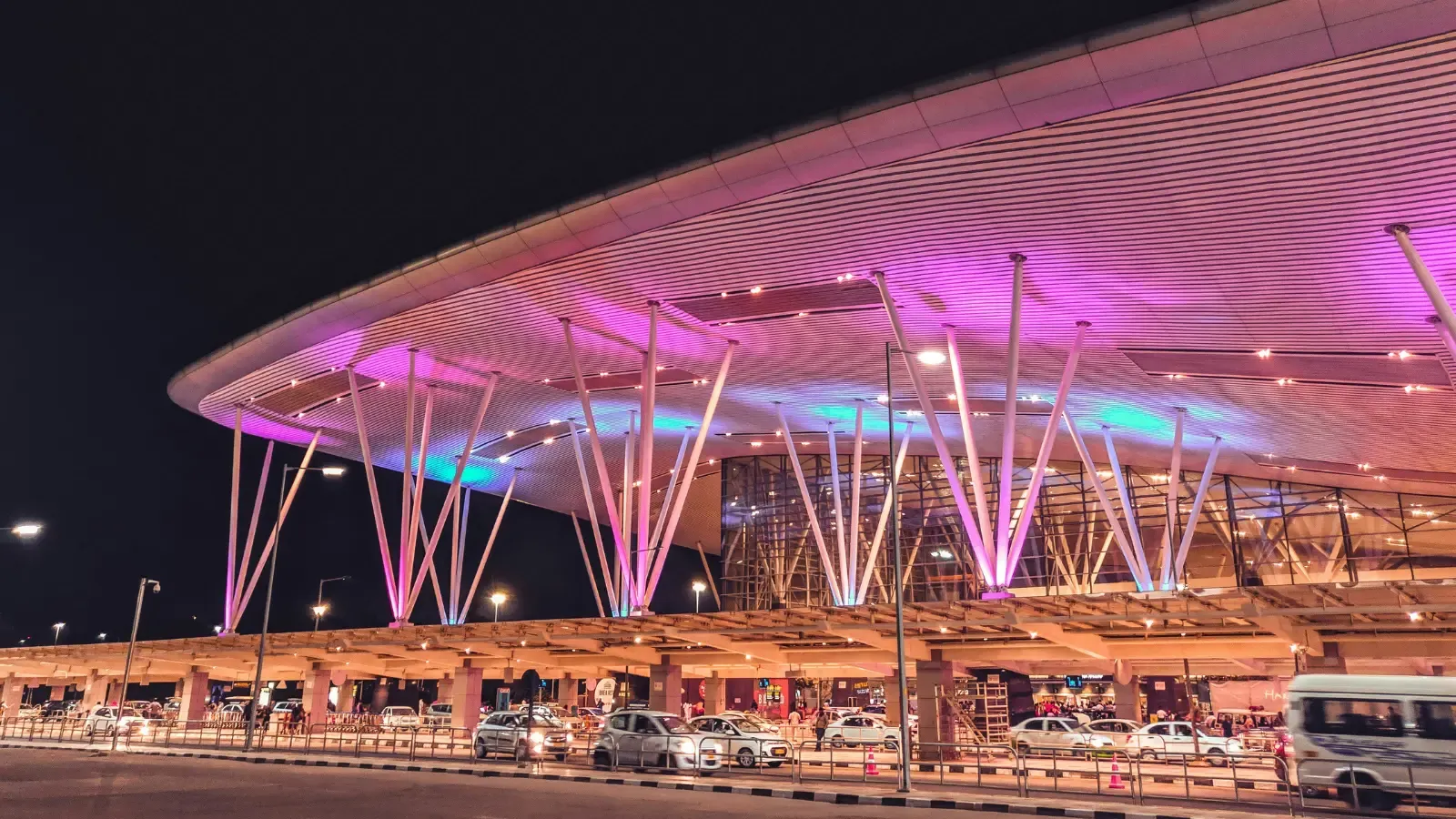
Airport corridor real estate Jakkur is being reshaped by KIAL impact, aerospace SEZ, and airport road growth. See the drivers behind Jakkur's price momentum.
The Single Most Powerful Force in North Bangalore Real Estate
Across the entire Indian real estate market, no single piece of infrastructure has reshaped a city's residential geography as decisively as the Kempegowda International Airport has reshaped North Bangalore. The airport corridor real estate Jakkur ecosystem is the direct consequence of that reshaping — a 25-kilometre arc of commercial, residential, hospitality, and industrial development that has emerged in the two decades since the airport was activated. Understanding how the airport drives demand in Jakkur is essential for any investor or end-user trying to forecast how the locality will perform over the next decade.
KIAL Impact Jakkur Prices — The Demand Backbone
The KIAL impact Jakkur prices effect operates through three layers. The first layer is the direct employment generated by the airport itself — airline staff, ground operations, retail and hospitality workers, and the corporate offices of aviation-related businesses. The second layer is the commercial buildout along the corridor — Manyata Tech Park, Kirloskar Business Park, Prestige Tech Cloud, the aerospace SEZ, and the upcoming financial city — which together generate the senior corporate demand base for luxury housing. The third layer is the hospitality and convention infrastructure that has emerged to serve airport-adjacent business travel.
Aerospace SEZ Real Estate Effect
The aerospace SEZ real estate effect on Jakkur is one of the structural drivers that distinguishes the airport corridor from other Bangalore growth axes. The KIADB Aerospace SEZ near Devanahalli has been activated in phases over the last decade, attracting global aerospace component manufacturers, MRO operations, and aviation R&D facilities. The senior technical and management talent associated with these operations forms a meaningful component of the airport corridor real estate Jakkur tenant and end-user demand, particularly in the ultra-luxury rental segment where housing allowances support the premium rent levels.
Airport Road Growth Corridor — The Geography
The airport road growth corridor extends from the Hebbal junction in the south to Devanahalli and beyond in the north, along the NH-44 alignment. Jakkur sits in the middle of this corridor, which gives it a structural advantage over both ends — closer to commercial employment than Devanahalli while closer to the airport than Hebbal. The airport corridor real estate Jakkur positioning therefore benefits from both sub-corridors simultaneously, while peers further north or south are biased toward one side. This middle-position advantage is one of the underappreciated reasons for Jakkur's outperformance in the five-year appreciation data.
The Corporate Demand Map
Employment Cluster | Distance from Jakkur | Approx. Employees |
|---|---|---|
Kempegowda International Airport | ~ 20 km | Direct + indirect: 50,000+ |
Manyata Tech Park | ~ 8 km | 80,000+ |
Kirloskar Business Park | ~ 7 km | 20,000+ |
Prestige Tech Cloud | ~ 16 km | 15,000+ |
KIADB Aerospace SEZ | ~ 22 km | 25,000+ (operational and growing) |
Hardware Tech Park | ~ 18 km | 15,000+ |
Bagmane Tech Park (planned expansion) | ~ 14 km | 20,000+ (when fully built) |
How the Corridor Story Compounds Over Time
Real estate demand from a single employment cluster produces a one-time pricing uplift when the cluster matures. Real estate demand from multiple overlapping clusters compounds — because the rental market thickens with diverse tenant categories, the resale market deepens with diverse buyer profiles, and the locality becomes self-sustaining as residents from one cluster create secondary demand (retail, hospitality, services) that drives the next layer of employment. The airport corridor real estate Jakkur thesis rests on this compounding effect, with multiple employment categories layered along a single arterial geography.
Forward-Looking Catalysts
Three forward-looking catalysts will further reinforce the airport corridor real estate Jakkur thesis over the next 5 to 7 years. First, the metro Phase 2A and 2B activation will bind the corridor more tightly to the inner city. Second, the IFCI Financial City buildout will add a financial services employment layer that does not currently exist in North Bangalore at scale. Third, the continued GCC expansion across the existing tech parks will add to the senior corporate demand base. Each of these acts independently of the others, which means the corridor story does not depend on any single catalyst landing on schedule.
Related reading: 75% Open Space Matters in a Luxury Gated Community.
FAQs
How does the airport drive real estate demand in Jakkur?
Through three layers — direct airport employment, commercial buildout along the corridor (Manyata, Kirloskar, aerospace SEZ), and hospitality/business travel infrastructure. Together they generate the senior corporate demand base for luxury housing.What is the aerospace SEZ effect on Jakkur prices?
Senior technical and management talent from aerospace operations contributes meaningfully to ultra-luxury rental and end-user demand, particularly with corporate housing allowances supporting premium rent levels.Why is Jakkur's airport corridor position better than Hebbal's or Devanahalli's?
Jakkur sits in the middle of the corridor — closer to commercial employment than Devanahalli, closer to the airport than Hebbal. It benefits from both sub-corridors simultaneously.
Related Articles
Century Astoria Cost Sheet Explained: Complete Pricing Breakdown for 3 & 4 BHK
Decode the full Century Astoria cost sheet breakdown — base rate, PLC, GST, stamp duty and registration for 3 BHK and 4 BHK residences in Jakkur.

Century Astoria Payment Plans, Offers and Pre-Launch Benefits
Compare Century Astoria payment plan options — construction-linked, possession-linked, and customised schedules. See pre-launch booking benefits in Jakkur.

Century Astoria Possession Timeline: When Can You Move In?
Find out the Century Astoria possession date Jakkur — handover schedule, construction milestones, and what pre-launch to handover looks like for buyers.
Century Astoria Construction Updates and Quality Standards
Track Century Astoria construction quality — RCC structural framing, finishing standards, construction timeline, and quality control on the Jakkur project.